
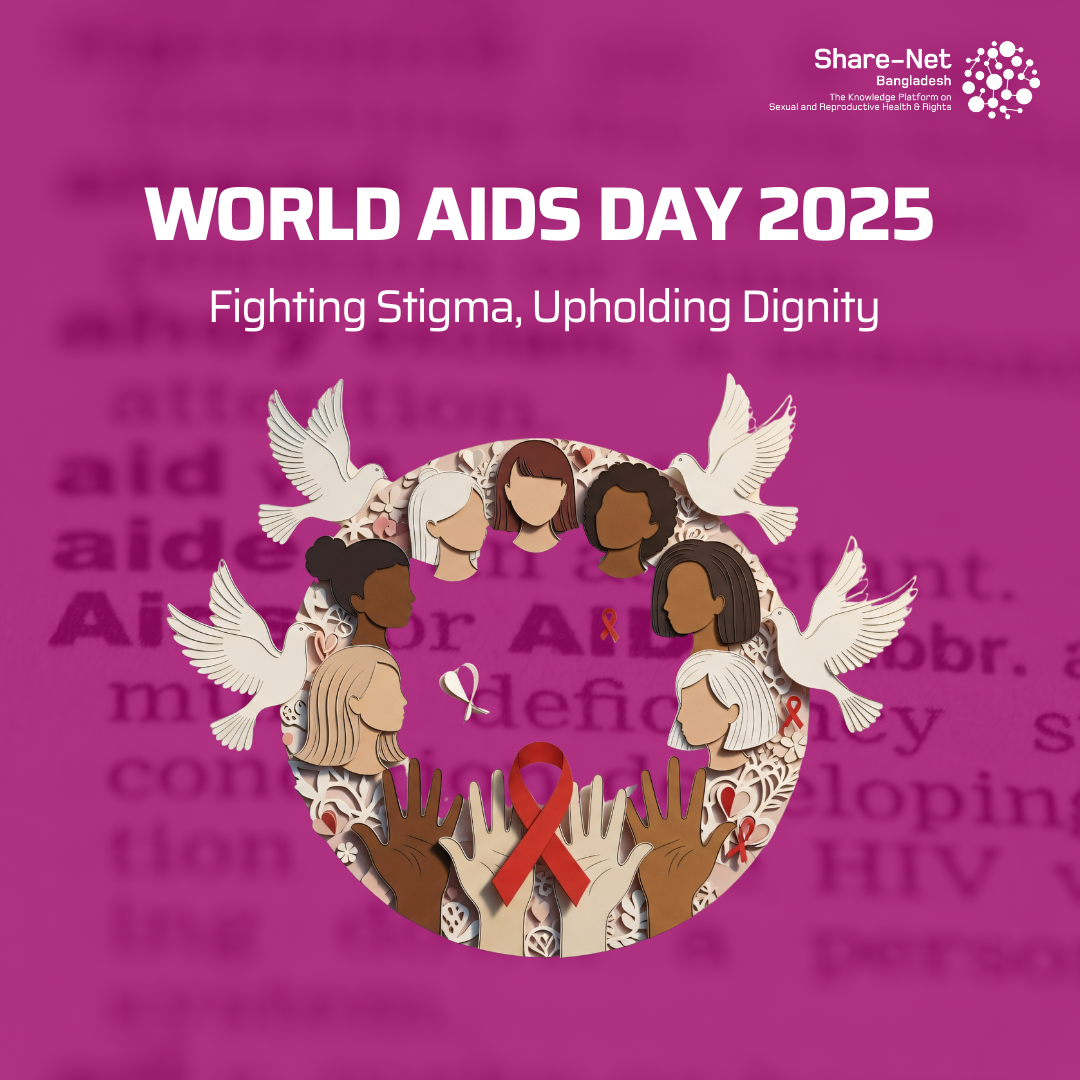
World AIDS Day 2025: Fighting Stigma, Upholding Dignity
There are moments in the year when the world must stop and look itself in the mirror, and World AIDS Day is one of those moments. On the first day of December, the world comes together to celebrate World AIDS Day. This year, the call is clear: “Overcoming disruption, transforming the AIDS response,” a reminder that progress is never guaranteed, and apathy can cost lives.
HIV has never been only a medical condition; it has always been an SRHR issue at its heart. It is the right to know the truth about one’s own body, the right to protect oneself, the right to walk into a clinic without bracing for judgment, and the right to live with dignity rather than in whispered shame. It is a reminder of how societies choose to respond, whether they listen to people’s real needs or push them into silence.
Yet the global picture remains sobering. By the end of 2024, 40.8 million people were living with HIV. In that same year, another 1.3 million people acquired the virus, and 630,000 lives were cut short by AIDS-related causes. Behind each figure stood a family doing its best to stay steady.
As Nelson Mandela once said, “It always seems impossible until it’s done.” That line still hangs in the air in every small community clinic and every late-night awareness session, in every person who continues to push back against stigma. Early testing saves time and heartbreak. The real test now is whether we can protect these hard-won gains in a world shaken by conflict, deepening inequality and shrinking health budgets.
It is no longer a question of possibility but of will and whether we act with determination before more stories are lost to numbers.
But in Bangladesh, a country which remains officially low in terms of HIV prevalence in the general population, recent data point to a more ominous upward trend. Recent figures from national health authorities show that 1,891 new HIV cases were diagnosed between the 12 months leading to October 2025 – the sharpest annual increase on record. In addition, 254 AIDS-related deaths have been reported. Studies depict a clearer picture. A 2025 study among people who inject drugs recorded HIV prevalence at 4.1 per cent, far above national averages, indicating that stigma and exclusion continue to drive the epidemic. Equally consequential was another study on male migrant workers, which underlined how limited SRHR awareness, hazardous working conditions and poor access to testing have led to thousands of people being susceptible to the virus.
The link between HIV and SRHR is very simple. When people can’t talk openly about sex, when young people can’t ask questions, when women can’t negotiate safety, when marginalised communities can’t walk into clinics without fear, the virus spreads quietly. And silence becomes dangerous.
World AIDS Day is not about symbolism; it is about insisting that human lives still matter. It is about keeping hope alive even when progress feels fragile. It is about choosing compassion over judgment, action over apathy.
Share-Net Bangladesh wishes everyone strength, solidarity and courage on World AIDS Day.
Source:
- UNAIDS
- UN
- WHO
- Dhaka Tribune