
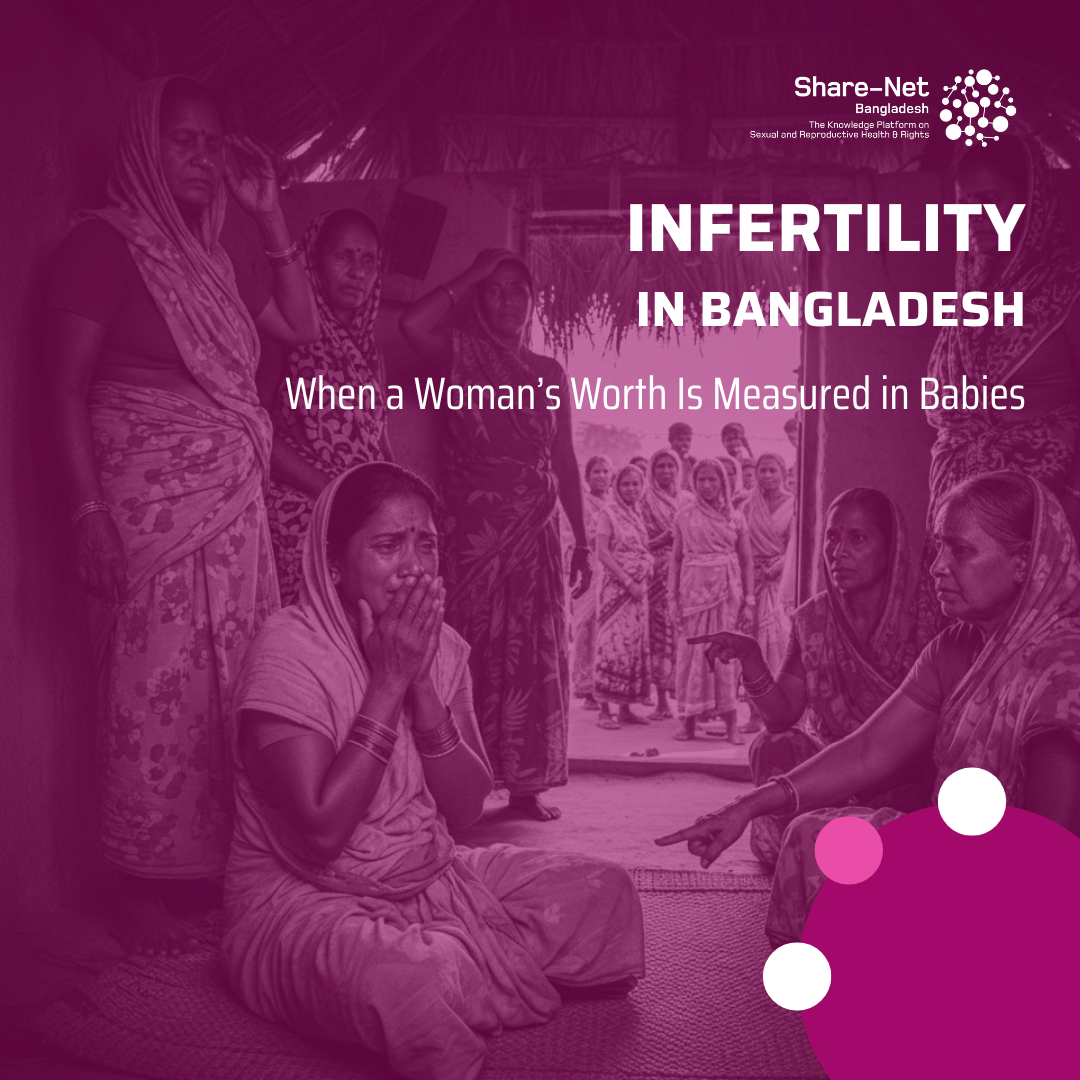
Infertility in Bangladesh: When a Woman’s Worth Is Measured in Babies
In Bangladesh, motherhood is not just a personal journey; it is a cultural expectation, a milestone etched into a woman’s identity. When that path is blocked by infertility, the consequences reach far beyond the clinic walls, landing in the very core of a woman’s social standing, her dignity, and her emotional world.
Medical definitions are simple: infertility is the inability to conceive after 12 months of regular unprotected sex. Globally, about one in six people face infertility in their lifetime. Around 15 per cent of couples worldwide are unable to conceive naturally, and this is recognised as a health issue by the World Health Organization (WHO).
Precise national figures for Bangladesh remain patchy, but research and surveys suggest that roughly 15 per cent of women of reproductive age in Bangladesh struggle with infertility, one of the highest rates in South Asia. Other estimates suggest that about 10–15 per cent of couples in the country face some form of infertility, aligning with global patterns, and that both male and female factors contribute roughly equally to infertility when properly assessed.
Yet the lived reality for many Bangladeshi women is not about statistics. It is about daily judgment, whispered questions at family gatherings, and the heavy burden of being seen as “incomplete” because they cannot conceive.
Infertility is often framed as a ‘woman’s issue’ in Bangladesh, even when medical evidence shows that men contribute to at least 40–50 per cent of infertility cases globally. The result is that women are blamed, held responsible, and shamed for something that is frequently a shared reproductive health issue.
An impactful study, “Infertility and Assisted Reproduction as Violent Experiences for Women in Bangladesh: Arts‑based Intervention to Address GBV (Arts for I‑ARTs),” highlights this stark reality. The research found that women are often held accountable for a couple’s inability to conceive, regardless of what medical tests show. Even when male infertility is confirmed, many families pressure women to stay silent to “protect the man’s dignity” and preserve family honour.
This framing helps explain why male reproductive health is seldom discussed openly, or why men are less likely to be tested or treated, even when evidence points to their contribution.
Infertility treatment remains out of reach for most Bangladeshis. Assisted Reproductive Technologies (ART) such as IVF and IUI are extremely expensive, placing them beyond the reach of most families. There are few public services, limited trained specialists, and no comprehensive policy support for fertility care. Many women, driven by desperation, turn to costly private clinics, traditional healers, or years of risky treatments that deliver little success.
Rural women face even steeper barriers. Limited awareness, transport costs, the absence of local specialists, and patriarchal control over healthcare decisions make seeking care a difficult, sometimes impossible choice. Even where services exist, informed consent and supportive counselling are often lacking, turning medical procedures into additional sources of trauma.
The stigma can also lead to gender‑based violence. When a woman is judged “at fault,” she may face emotional abuse, controlling behaviour, or even physical violence from spouses and in‑laws. In a society where a woman’s value is so closely tied to motherhood, infertility can become a trigger for harassment, humiliation, and threats of abandonment or second marriages.
To change this narrative, we need more than clinics and technologies. We need public awareness that infertility affects both partners equally, health policies that make diagnosis and treatment accessible to all, and social support systems that restore dignity to women who are far more than their ability to conceive. Only then can we challenge the stigma and offer hope to those who have long suffered in silence.
Sources:
- The Daily Star
- PubMed