
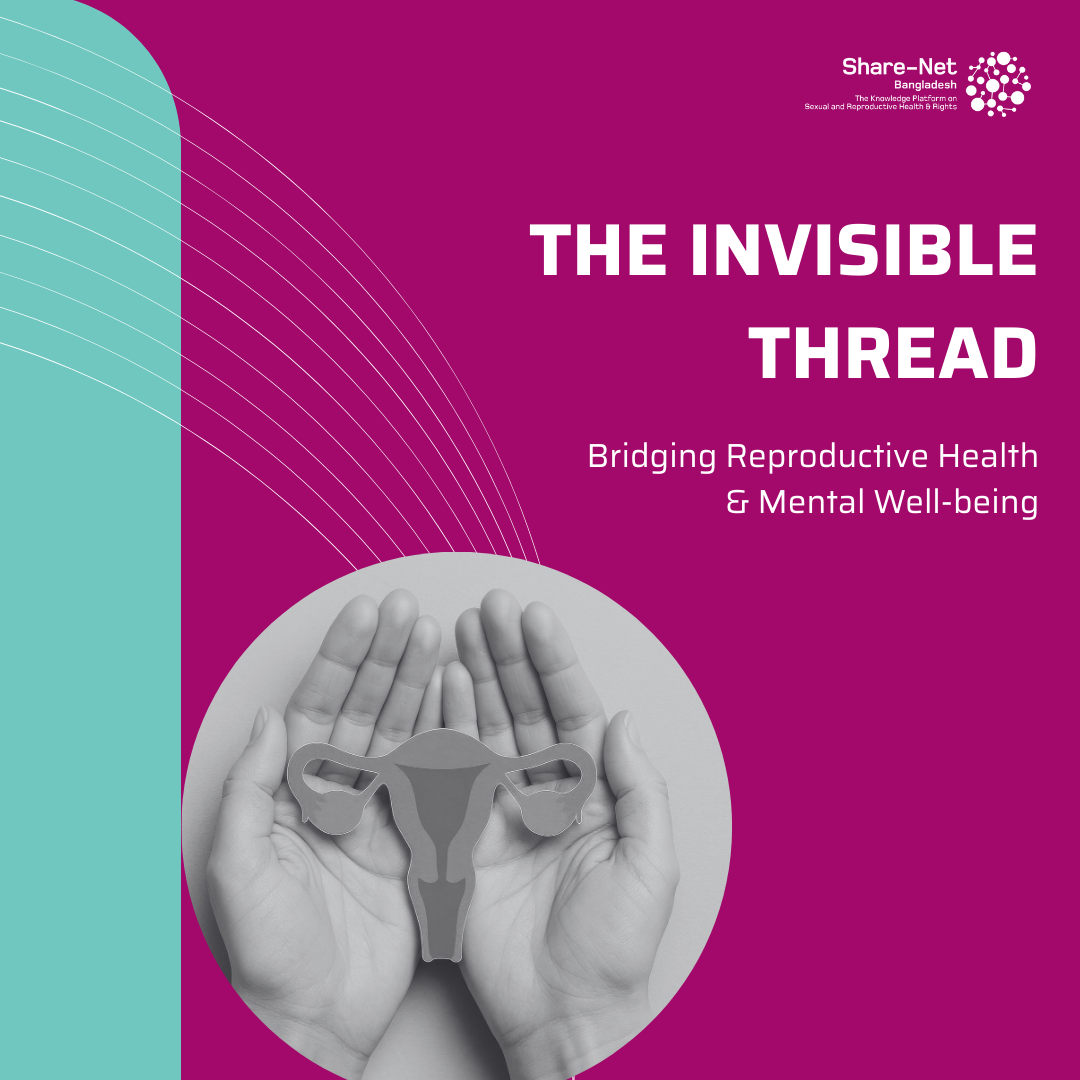
The Invisible Thread: Bridging Reproductive Health and Mental Well-being
For generations, women have been told that their bodies and minds live in separate rooms. However, science has finally caught up to what many have felt for years in this decade. There is an invisible thread, a bidirectional highway, connecting the reproductive system and the brain. When one speaks, the other listens.
Historically, medical systems have dismissed women’s concerns as “hysteria,” a word rooted in the Greek for uterus. This has left many to suffer in silence, but we must shift toward holistic healthcare.
Reproductive health is not just about the absence of disease; it is about complete mental and social well-being. A study by Irfat Ara and colleagues highlights that reproductive health impacts every stage of a woman’s life cycle, from puberty to the final years, and must be treated as a continuous journey.
Consider the monthly cycle. Many experience PMS, but Premenstrual Dysphoric Disorder (PMDD) is on a different level of its own entirely. It is a severe mental health reaction to hormonal shifts. The psychological toll of “powering through” cyclic pain is exhausting. We are taught to hide our heating pads and carry on, yet this chronic suppression of physical pain often leads to burnout and anxiety. When we ignore the body, the mind pays the price.
The stakes get higher during major life transitions. Infertility and pregnancy loss carry a heavy mental burden, often leading to deep grief that goes unrecognised by society. Similarly, navigating perinatal and postpartum mood disorders is not a sign of failure. It is a biological and emotional shift that requires professional validation.
As we age, the “change of life” brings new challenges. During menopause, falling oestrogen levels do more than cause hot flushes; they affect cognitive function, leading to “brain fog” and increased anxiety. We should reframe menopause as a vital mental health milestone, a time to recalibrate rather than a period of decline. It is a moment for the brain and body to find a new rhythm.
The link to Sexual and Reproductive Health and Rights (SRHR) is clear. True reproductive freedom includes the right to mental health support. A study by Gita Sen and Srilatha Batliwala suggests that reproductive health is a “capability,” meaning it is a fundamental tool women need to lead a life they value. When sexual health suffers, so does the mind. Research by Cezar-Doru Radu and a team of researchers confirms a strong systematic link between sexual health and psychological quality of life. One cannot treat the reproductive organs while ignoring the person they belong to.
It is time to find practitioners who validate both our physical and mental symptoms. If a doctor tells us our pain is “just part of being a woman,” it is time to find someone who understands the complexity of our health.
Real healthcare considers the whole person, acknowledging that the connection between our hormones and our happiness is genuine. By bridging this gap, we move toward a future where women no longer have to choose between their physical health and their sanity.
We are not just a collection of parts; we are a connected system that deserves to be heard.
Source:
- UNFPA
- Taylor and Francis Online
- Multidisciplinary Digital Publishing Institute
- international journal of current research in physiology and pharmacology