
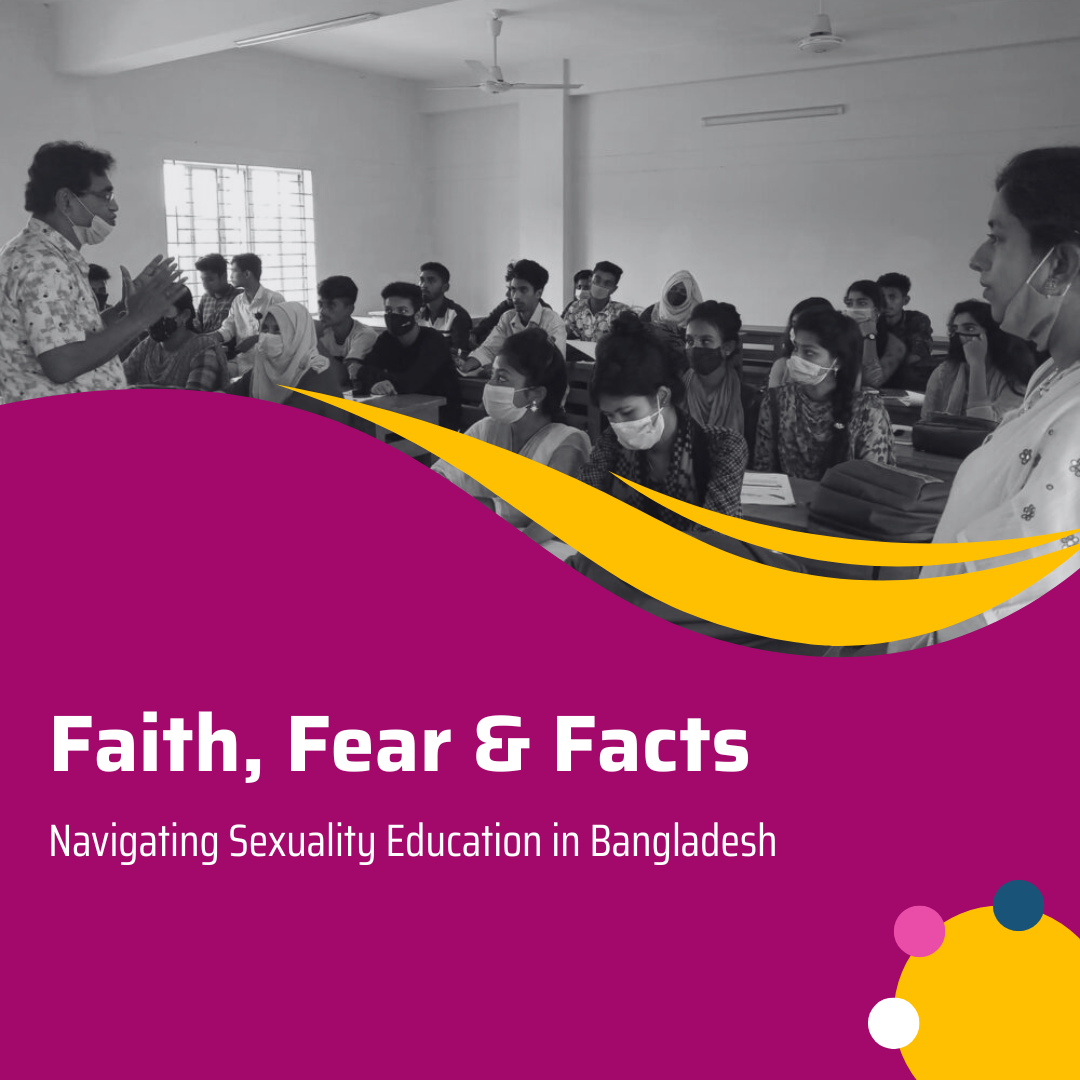
Faith, Fear and Facts: Navigating Sexuality Education in Bangladesh
“Contrary to popular belief, comprehensive sexuality education (CSE) isn’t exclusively about sexuality. Beyond information on safe sex and pregnancy prevention, CSE teaches people to be aware of their bodies, respect boundaries, and understand consent.” – Dr Riad Mahmud, Health Specialist, UNICEF, during a recent interview with Daily Star.
In the context of Bangladesh, there is an increasing number of youngsters who find themselves in the middle of silence and risk. They grow up in adolescence without access to reliable information about themselves, relationships, consent, and health. This has consequences not only for the individual but also has broader societal impacts in relation to health, equity, and opportunities. Here, Comprehensive Sexuality Education plays an important role because it can fill the aforementioned knowledge gaps.
Essentially, CSE is not only about sex. It is a well-structured scientific programme about human development, relationships, feelings, consent, reproduction, STIs, and respect for diversity. It aims to develop life skills in communication, decision-making, and critical thinking, which are essential in helping young people negotiate life safely. This is why it is so important, according to UN agencies such as UNFPA, which consider CSE crucial for the well-being and rights of young people.
However, in the case of Bangladesh, despite having the second-largest population of adolescents in the world, the matter of sex education is not comprehensive. The government has included some aspects of sex education in the curriculum of school subjects, but has not developed an internationally recognised curriculum on the topic.
In Bangladesh, early and child marriage is still a significant problem, as more than 50 per cent of women aged 20-24 years are married before the age of 18, and most of them are unaware of their own reproductive health rights. There are deeply embedded cultural and religious beliefs about sex education that deem it to be unsuitable and wrong. In most communities, it is considered an embarrassing topic to talk about sexuality and relations, and it is feared that teaching children about sex will lead them to participate in sexual activities.
These misconceptions impede open discussion, trapping entire families and schools in avoidance. However, what young people have actually been saying is quite different; they demand guidance, clarity, and respect when educating them about their lives.
Internationally, it has been found that approximately 85 per cent of nations have either sexuality education-related policies or laws in place, though many of these guidelines are restricted to superficial learning. UNESCO has made this point clear.
In Bangladesh, government documents recognise adolescent health and life skills, but there is no clear, comprehensive national strategy for sexuality education that aligns with international technical guidance. Implementation in schools varies widely, and many teachers are not trained to handle sensitive topics with confidence or care.
Despite the many shortcomings of the implementation of CSE, some tangible progress has still been made. Over the years, students have grown to become more open-minded toward issues like menstruation, sexuality, and puberty, crediting much of the progress to the inclusion of sex education in textbooks.
Yet, progress cannot serve as an excuse for complacency. While current initiatives are a foot in the door, we still have a very long way to go. Our youth have a right to access crucial information about their bodies, and it is our responsibility to ensure that what they’re provided with is comprehensive, accurate, and inclusive.
Sources:
- UNFPA
- UNESCO
- The Daily Star
- Share-Net Bangladesh