
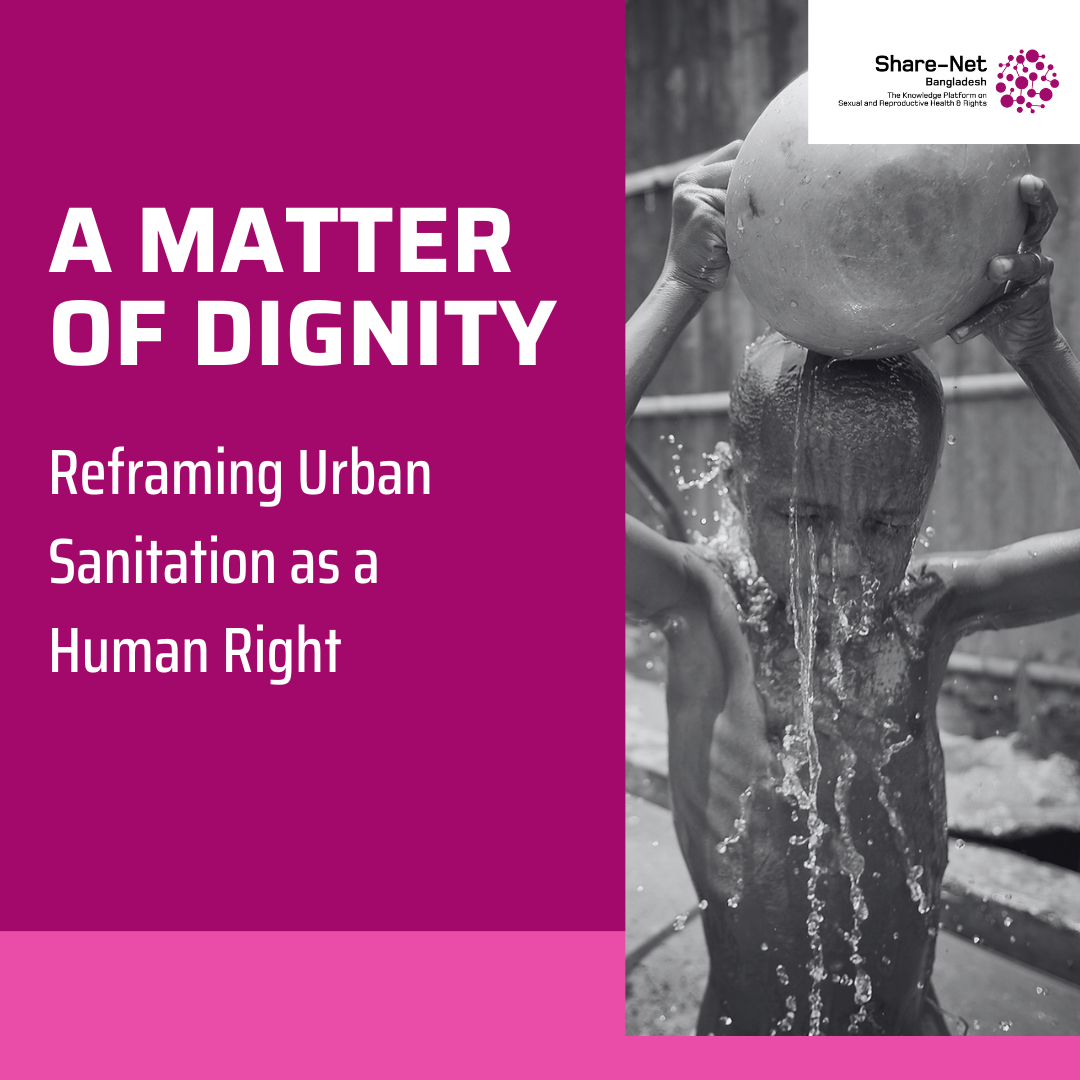
A Matter of Dignity: Reframing Urban Sanitation as a Human Right
Most of our ideas for urban sanitation are just centred around pipes, drains, and facilities. But the truth is, this narrow perspective overlooks a fundamental truth, which is that sanitation is a matter of dignity, safety and most importantly, human rights. Let it be UN General Assembly Resolution 64/292 of 2010, Article 11 of the International Covenant on Economic, Social and Cultural Rights, or Human Rights Council Resolution 15/9 (2010), the international community has agreed that sanitation is indeed a human right issue. Even from the lens of Sustainable Development Goals, the human rights approach to sanitation bears paramount importance.
Imagine taking a walk through the streets of Gulshan, one of the most glamorous parts of Dhaka and seeing a lake that separates it from a whole new world that reflects poverty, injustice and horrible living conditions. The Karail slum is a prime example of this urban sanitation disparity, where anyone would be surprised to know that sanitation has a human rights perspective. Globally, 3.4 billion people still lack safely managed sanitation services. Of these, 1.5 billion people lack even basic sanitation, and 354 million still practice open defecation, according to the WHO/UNICEF Joint Monitoring Programme report.
The first thing that comes to mind when we discuss how gender and sexuality differentiate sanitation experience between men and women would be the daily search for a safe and accessible toilet. The lack of clean, well-lit facilities poses risks of harassment and assault. Moreover, this challenge gets even more unbearable during menstruation as inadequate infrastructure and social taboos often make hygiene management difficult and shameful. Furthermore, sanitation systems are frequently designed in a rigid and binary fashion, which ignores the diverse needs of the LGBTQ+ community, who often face exclusion, harassment, and even violence in public restrooms.
Urban sanitation is intrinsically linked to Sexual and Reproductive Health and Rights (SRHR). The lack of private, clean, and safe sanitation facilities directly impacts a person’s ability to manage menstruation, pregnancy, childbirth, and postpartum care with dignity. When these facilities are absent or unsafe, individuals face increased health risks, social stigma, and are often forced to miss school or work. Addressing urban sanitation is therefore a critical step toward ensuring SRHR for all.
The problem with existing urban sanitation policies is that, rather than solving inequality, they fail to bridge the gaps in equitable access. Many people still think that viewing sanitation through a rights-based lens is a radical idea, whereas it is a necessity. Moving forward, urban planning needs to include the voices of women and diverse communities. It’s time to reframe sanitation as a justice issue.
Sources:
1. UNDP
2. A Review of Privatization of Water and Sanitation Systems
3. UNHRC
4. UNICEF