
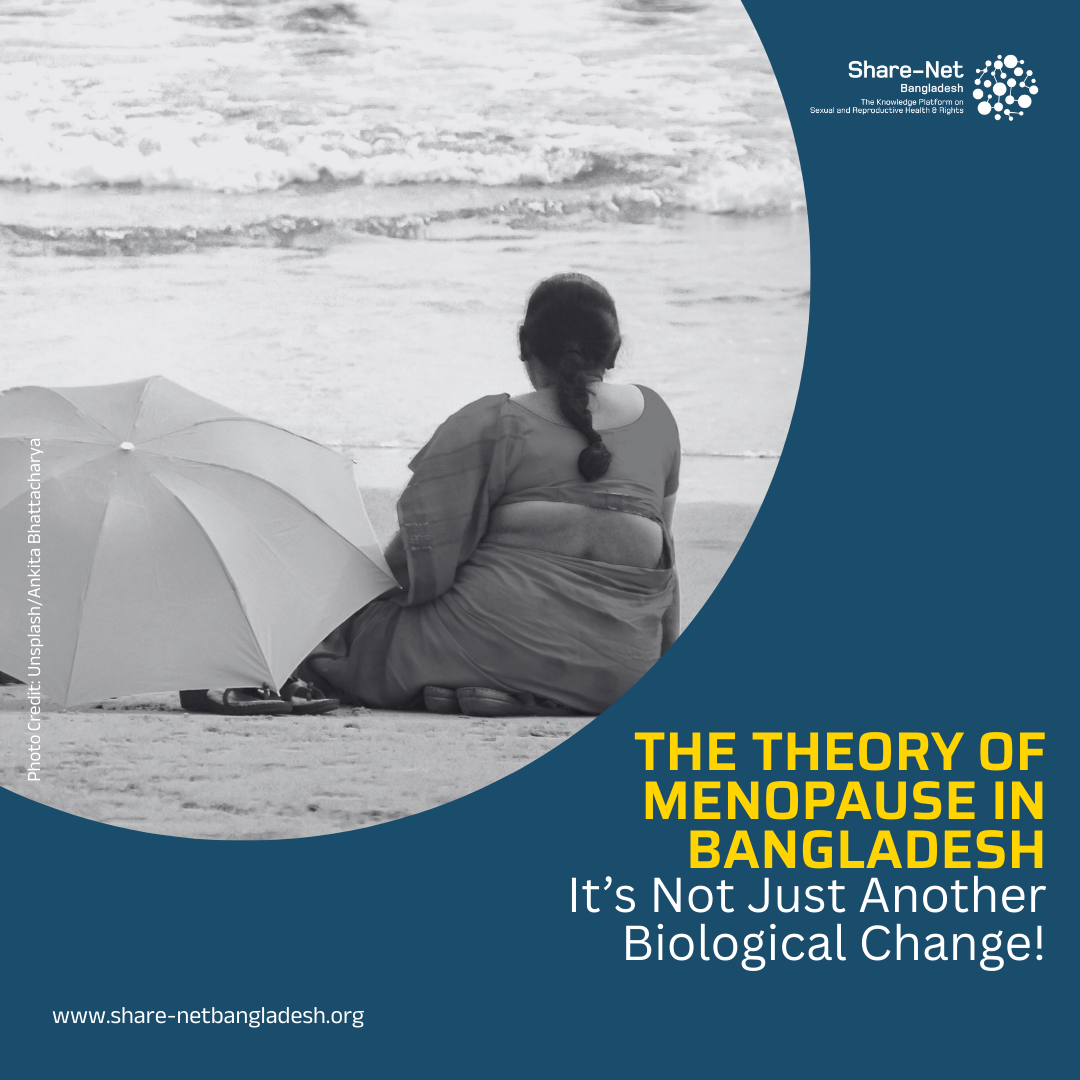
The Theory of Menopause in Bangladesh: It’s Not Just Another Biological Change
Menopause is often described as the moment a woman’s menstrual cycle ends. However, it is far more than that in the actual sense. It is a severe physical, emotional, and social transition. In Bangladesh, most women undergo menopause in their early to mid-40s, with some not having the slightest idea of what is going on with their bodies and why. Having little information, a lack of social support and lots of family responsibilities means that menopause is a painful and isolating process for many women.
In various regions of Bangladesh, it has been found that menopausal symptoms are very prevalent and, in many cases, are very intense. Women complain of constant pain in the body, muscles and joints, extreme tiredness, sleep problems, and hot flushes. Psychological symptoms that include anxiety, irritability, and depression, are also common. In Cumilla, in low-income urban areas of Dhaka, and beyond, both of these symptoms have a serious impact on the quality of life of women and disrupt their daily operations. (Sultana and Saleh, 2025) (Mili et al., 2024)
Mental health is one of the least taken into consideration issues of menopause in Bangladesh. A 2020 national survey of pilots also found that 96% of women aged 45 to 60 years old stated that they had undergone some form of depression during the menopausal transition (Harun et al., 2020).
A large number of women suffer emotionally at this stage, but hardly any of them are accorded any form of support or treatment. Depression, low mood and anxiety are normalised or neglected. The absence of awareness or social stigma and shame about discussing reproductive and mental health makes women seek no help. Consequently, most of them remain silent victims since they think that whatever happens to them, they just have to put up with it.
Menopause is also a factor in influencing how women perceive themselves. The cessation of their reproductive life would be a painful experience to some, as it gives them the feeling of identity loss. It has been reported that women declare themselves less of a woman when they no longer menstruate in a study, and 61% of the women in one study said that they no longer felt like women, and 91% of women said that their relationships with men were worse since becoming menopausal (Goodman, 2020).
The change can also cause stress in marriage relations, particularly in a culture where womanhood is closely associated with fertility. It also happens that menopause in some situations coincides with the existing gender inequities, thus placing the female at risk of emotional, physical, and economic mistreatment in the family.
The status of economic vulnerability is a significant factor that defines menopausal experiences. Less educated, poor, or rural women tend to have earlier or premature menopause and worse health outcomes (Goodman, 2020; Harun et al., 2020). The age group of many women in
Bangladesh’s housewives or those who are physically involved in informal jobs. Such symptoms as pain in the joints, exhaustion, and insomnia decrease their competence to work and make some people abandon income-generating activities causing poverty in families.
In Bangladesh, the menopause is at the interface of health, gender and poverty. Its symptoms affect the bodies and minds of women, but its deepest consequences in most instances are the dependency of the economy, bad relationships and health. Considering that, by turning menopause into a national health and development concern, and not a biological event that is a personal affair, it is possible to ensure that in Bangladesh, women age gracefully, healthily, and financially.
References:
- Goodman, N. F. (2020). Menopause and mental health: Cultural silence and stigma. Climacteric, 23(3), 219–224.
- Harun, M. A., Kabir, A., & Islam, M. S. (2020). Knowledge, attitude, and psychological symptoms of menopause among Bangladeshi women: Findings from a national survey. Asian Journal of Psychiatry, 54, 102–110.
- Mili F. R., Rahman, S., & Chowdhury, A. B. (2024). Menopausal symptoms and health-related quality of life among women in Cumilla district, Bangladesh. BMC Public Health, 24(1), 1–12.
- Sultana, N., & Saleh, F. (2025). Menopausal experiences among urban poor women in Dhaka, Bangladesh. Journal of Women & Aging, 37(1), 1–18.
