
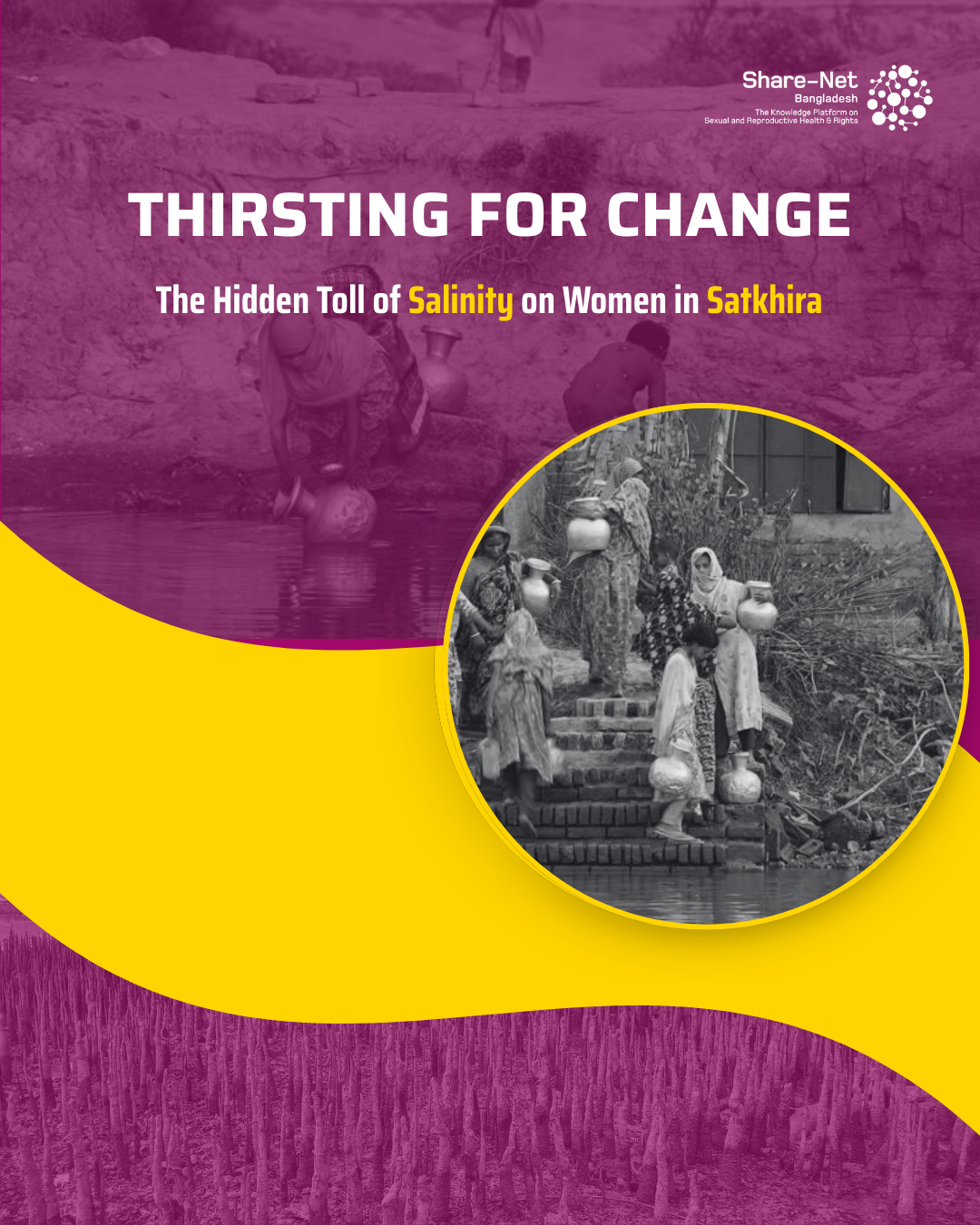
Thirsting for Change: The Hidden Toll of Salinity on Women in Satkhira
In the sun-drenched coastal district of Satkhira, Bangladesh, the water that once sustained life has become a source of profound suffering. For women of reproductive age, the beauty of the delta is increasingly overshadowed by a harsh new reality. As rising sea levels push saltwater further inland, the simple act of fetching water or maintaining hygiene has transformed into a dangerous gamble with their health.
A recent study by Amin et al., published in Frontiers in Public Health, reveals the staggering physical and psychological toll this environmental shift takes on local women. The research highlights how the intrusion of saline water creates a “chaotic relationship” between the environment and human biology. For many, this translates into chronic skin diseases, gynaecological infections, and severe reproductive complications.
The study selected the five most vulnerable unions of Shyamnagar upazila in Satkhira district. This study adopted a multi-method approach combining in-depth interviews and KIIs. Based on this methodological guide, the study interviewed 25 women and 5 married men, and their responses have been further supplemented and validated by Key Informant Interviews with health workers and medical officers.
Climate justice and sexual and reproductive health and rights work are too often kept separate, even though communities experience them together.
The intricacies of this crisis are deeply gendered. Women in these communities are the primary gatherers of water, often walking miles to find fresh sources as local ponds turn salty. When fresh water is unavailable, they are forced to use saline water for drinking and bathing. This practice is linked to a rise in hypertension, particularly among pregnant women, which can lead to life-threatening conditions like preeclampsia. These findings echo broader research, such as a study by Khan et al. (2011), which established a clear link between drinking water salinity and increased blood pressure in coastal populations.
Furthermore, the lack of clean water makes menstrual hygiene management nearly impossible. Many women rely on old rags that are washed in contaminated water and dried in damp, shaded areas due to cultural taboos surrounding menstruation. “We use old clothes again and again without washing them properly… germs are not properly reduced, and we get infected,” explained Rowshan Ara, a 28-year-old resident. These unhygienic practices lead to frequent infections that often go untreated because of the distance to medical facilities and a lack of female healthcare providers.
The climate crisis also extends to mental health. The constant stress of water scarcity, coupled with the financial strain of failing crops and increasing medical bills, has led to widespread anxiety and depression. Women report sleeplessness and irritability, often exacerbated by the physical exhaustion of their daily chores. One resident, Lucky Begum, shared that she now relies on medicine just to sleep.
This situation is worsened by intensifying heatwaves. Extreme temperatures increase the risk of heatstroke and dehydration, while also creating breeding grounds for vector-borne diseases like dengue. Despite the best efforts of community clinics to provide iron and calcium supplements, they are often ill-equipped to handle the complex gynaecological issues arising from the saline environment.
The study concludes that without integrated solutions that address both water security and specialised healthcare, the women of Satkhira will continue to bear the heaviest burden of a changing climate. It is no longer just about rising sea levels; it is about the survival and dignity of those living at the edge of the world. Global climate policy must move beyond carbon targets and focus on the immediate, visceral health needs of these vulnerable coastal communities.
Source: Frontiers